How to Make AI UGC Ads With a Consistent AI Avatar
To make AI UGC ads, cast one AI avatar and keep that same face in every ad. Write a short script with a strong first line, make the clips with a video model that keeps the face, then make many variations: new hooks, new settings, new languages. Label the ads as AI where the platform asks, and let real results pick the winner.
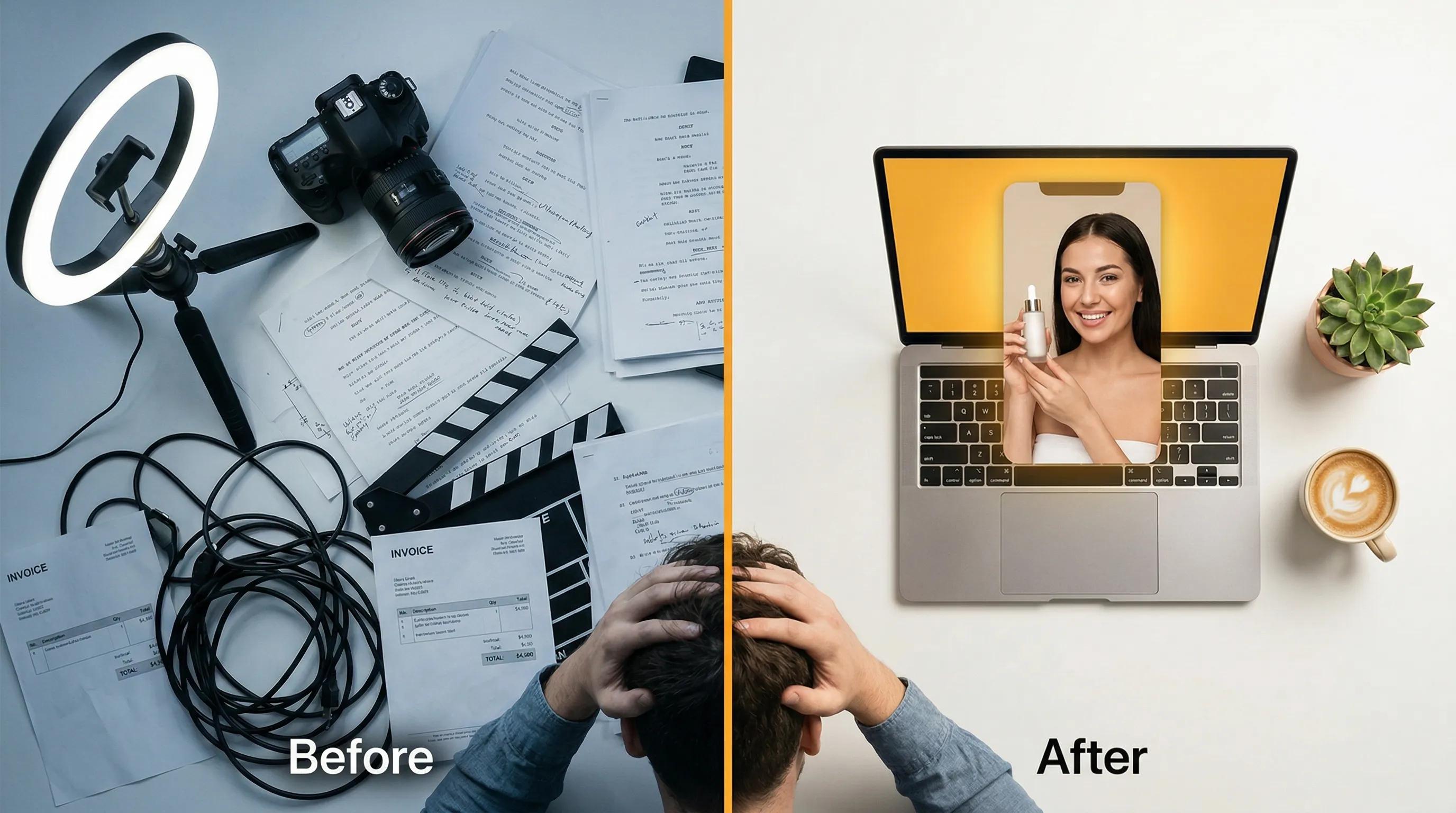
UGC means “user-generated content”: the phone-style video where a person talks to camera about a product. It works because it feels like a recommendation, not an ad. AI UGC keeps that look, but the person is an AI avatar, so you can make thirty versions in the time one creator shoot takes. This guide covers the six steps, what the public data says about AI against human UGC, and the rules you must follow.
Do AI UGC Ads Work as Well as Human UGC?
On clicks, roughly yes. On trust, humans still lead. The best public study we found is Taboola’s “AI Ads That Work”, published on January 28, 2026 with researchers from Columbia, Harvard, the Technical University of Munich and Carnegie Mellon (read on October 26, 2026). It compared AI ads and human-made ads from the same advertiser, for the same campaign, on the same day, across more than 500 million impressions.
- In the raw data, AI ads averaged a 0.76% click-through rate against 0.65% for human-made ads. With the strictest statistical controls, the two performed about the same.
- AI ads that did not look artificial earned the highest engagement of all, ahead of human-made ads and of AI ads that looked fake.
- A large, clear human face was one of the strongest signals that an ad felt human and trustworthy.
Note that this study covers AI ads in general, not UGC only. For UGC itself, the numbers come from vendors who sell AI UGC tools, so read them with care. Segwise’s guide (updated October 12, 2026, read October 26, 2026) cites field data that puts AI UGC at 85% to 110% of the click-through rate of good human UGC, and about $5 to $30 per AI video against $150 to $500 for a mid-tier human creator. The same guide reports that most brands still prefer human UGC for trust.
So the honest verdict: AI UGC rarely beats a great human creator on a single ad. Its advantage is volume. You can test many hooks, faces, settings and languages for the price of one shoot, and keep spending on the winner.
| AI UGC | Human UGC | |
|---|---|---|
| Cost per video | Low (vendor figures: about $5 to $30) | Higher (vendor figures: about $150 to $500 mid-tier) |
| Time to first video | Minutes to hours | Days to weeks (briefing, shipping, filming, edits) |
| Variations | Many: new hook, setting or language without a reshoot | Few: each change is a new shoot |
| Same face every time | Yes, with a reference sheet (results vary) | Yes, while the creator is available |
| Trust and real experience | Lower in trust-sensitive products | Higher: a real person who used the product |
| Disclosure | AI labels may apply | Paid partnership labels apply |
Why Use One Consistent AI Avatar?
A random new face in every ad looks like a stock catalog. One recurring face looks like a person your audience starts to recognise. It also makes your tests cleaner: when only the hook changes and the face stays the same, you learn which hook works.
The hard part is keeping the face. Most AI models redraw a person a little differently every time. The fix is a reference sheet: one image of the same person from several angles, sent with every generation. We explain the method in Consistent AI Characters: How to Keep the Same Face.
How to Make AI UGC Ads in 6 Steps
Step 1: Cast your AI avatar
Decide who your buyer trusts. A skincare brand for women in their thirties needs a different face than an energy drink for gamers. Write a short description (age range, style, energy), generate a few options, and keep one.
Then build the reference sheet for that person and save it. Every ad from now on starts from that sheet, never from a fresh prompt.
Step 2: Write the hook first
The first two seconds decide whether anyone watches. Write five to ten first lines before you write anything else. Good UGC hooks sound like a person, not a brand:
- “I didn’t believe this would work on my skin.”
- “Three things I stopped buying after I found this.”
- “Okay, I need to show you what came in the mail.”
Keep the full script short. A 15-second ad holds about 30 to 35 spoken words. Say one benefit, show the product, and end with one clear action.
Step 3: Make the clips with the face locked
Use a video model that accepts reference images and makes speech with sound, so the avatar can say the line on camera. Send the reference sheet, the product photo and the script. One action per shot works best: hold the product up, open it, try it, react.
Shoot it like a phone video. Handheld framing, a real-looking room, natural light. The Taboola study found that AI ads which did not look artificial did best, so avoid glossy, over-lit scenes.
Step 4: Make the variations
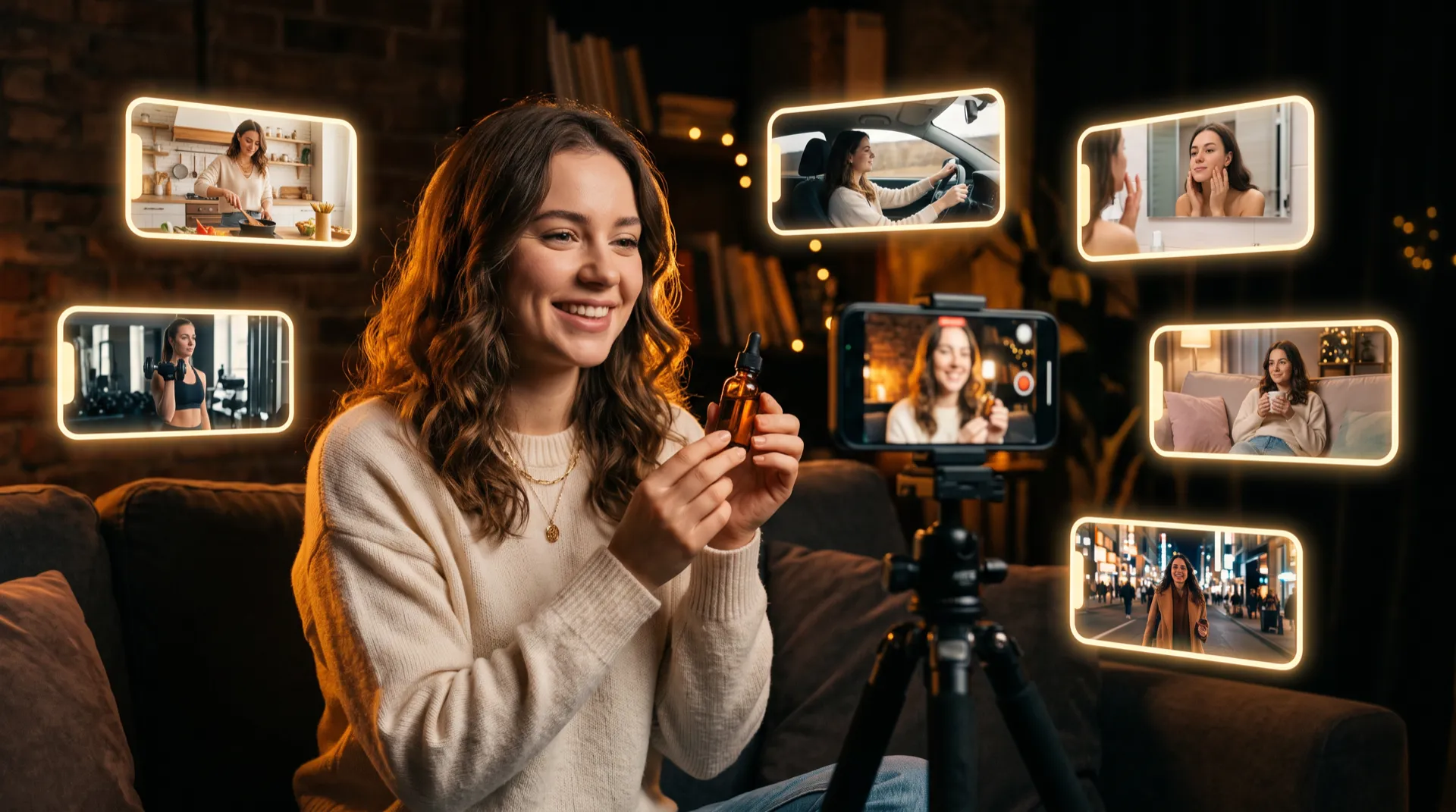
This is where AI UGC earns its money. Keep the face and the product, and change one thing at a time:
- The hook. Same video body, five different first lines.
- The setting. Kitchen, car, bathroom mirror, gym.
- The language. The same ad for each market you sell in, with the same face.
- The format. 9:16 for Reels and TikTok, 1:1 or 4:5 for feeds.
Changing one thing per variation is what makes the results readable. For more on testing, see How to Create AI Video Ads Without a Production Team.
Step 5: Add captions and label honestly
Most people watch with the sound off, so add captions. Then check the platform rules:
- TikTok requires creators to label AI-generated or significantly edited content that shows realistic-looking scenes or people (TikTok Community Guidelines, effective September 24, 2026, read October 26, 2026).
- Meta labels ad images created or significantly edited with AI tools, including third-party tools, with “AI info” in the “About this ad” screen (Meta Help Center, read October 26, 2026).
An AI avatar is a character, not a customer. Never present it as a real buyer with a real experience. The US Federal Trade Commission’s rule on fake reviews and testimonials, announced in August 2024, bans testimonials that misrepresent that they come from someone who does not exist, and names AI-generated fake reviews (FTC press release, read October 26, 2026). Let the avatar present the product; do not let it pretend to be a customer.
Step 6: Test, then make more of the winner
Run the variations with the same budget each and let them collect data for a few days. Keep the winning hook and setting, then make the next round of variations around it. Since the face stays the same, the series keeps building recognition while you test.
What Makes an AI UGC Ad Look Fake?
- A face that changes between clips. Fix it with a reference sheet.
- Studio-perfect light on a “phone” video. Ask for natural light and a lived-in room.
- Too many words. Long lines make lip movement and pacing worse. Keep lines short.
- Hands and labels. Product text and fingers are the most common errors. Use a real product photo as a reference, and check every frame before you publish.
- One take for everything. Real UGC has small cuts. Two or three short shots feel more natural than one long one.
How to Make AI UGC Ads in MeetNour
MeetNour is an AI production team in one tool. Here is the same workflow inside it:
- Casting Room: create your AI talent once, with an identity sheet that shows the face from several angles. We aim for 85 to 90% face consistency across your scenes; results vary by model and scene.
- Director Room: write the ad brief and pick your talent. You get concepts, a storyboard with one frame per shot, the video clips and a final video with voiceover and music. The price is on each button before anything is spent.
- AI Studio: make single clips and images with the model you choose, from a curated shelf of leading AI models, or let Nour pick. Natural AI voices in 12 languages help with language variations.
- VFX Studio: turn a product photo into a short clip with one of 50 camera moves, useful as a B-roll shot between talking lines.
- Caption Studio: add animated captions as the last step.
The full use case is on our AI UGC video ads page. MeetNour makes the videos; it does not publish them or run your ad accounts.
FAQ
What is an AI UGC ad?
An AI UGC ad is a short video in the style of user-generated content, where a person talks to camera about a product, but the person is an AI avatar instead of a hired creator. It keeps the casual phone-video look that makes UGC work, at a lower cost per video.
Are AI UGC ads as effective as human UGC?
On clicks, about the same in public data. A Taboola study published in January 2026 found AI ads and human-made ads performed comparably under strict controls, and AI ads that did not look artificial did best. Human creators still win on trust, so AI UGC works best for testing many variations quickly.
Do I have to label AI UGC ads?
Check each platform. TikTok requires creators to label realistic AI-generated content, and Meta adds an “AI info” label to ad images made or significantly edited with AI. Never present an AI avatar as a real customer: the FTC’s rule bans fake testimonials, including AI-generated ones.
How do I keep the same AI avatar in every ad?
Use a reference sheet: one image of the avatar from several angles, sent with every generation, and choose a video model that accepts reference images. Keep the outfit and lighting notes the same too. Expect high consistency, not perfection.
How long should an AI UGC ad be?
Most UGC ads run 15 to 30 seconds. Put the hook in the first two seconds, say one benefit, show the product and end with one action. About 30 to 35 spoken words fit a 15-second ad.
MeetNour is launching soon. Join the waitlist to cast your AI talent once and make every ad variation with the same face.

Write a brief.
Get a full campaign.
MeetNour is your AI production team in one tool: images, videos, AI avatars, effects, voiceovers and captions, with your brand kit and AI talent. A short shelf of leading AI models, kept current: Nour picks the right one for each job, or you choose.