Faceless YouTube With AI in 2026: What Still Gets Monetized
Yes, a faceless YouTube channel made with AI can still earn money in 2026. YouTube does not ban AI and does not ask you to show your face. It refuses to pay for content that feels mass-produced: templates, near-identical videos and readings of other people’s work. Original stories and a clear human point of view stay eligible.
“Faceless” simply means the creator never appears on camera. The channel uses narration, animation, stock footage or AI visuals instead. That format is allowed. What changed is that the cheap version of it, a script bot feeding a video bot, is exactly what YouTube’s policy now describes. This guide uses YouTube’s own Help pages, read on November 2, 2026, and says clearly where a claim comes from somewhere else.
Does YouTube Monetize AI Videos?
Yes, when the channel passes the same review as any other channel. YouTube’s channel monetization policies give two allowed examples: using AI to visualize a unique character and narrative you invented, and using AI to edit your scripts. So the tool is not the test. The finished channel is.
The same page lists what is not allowed. YouTube renamed “repetitious content” to “inauthentic content” in a notice dated July 15, 2025. A year later, Tubefilter reported on July 13, 2026 that YouTube had reworded the guidance into clearer categories, and that the rules themselves had not changed.
| What YouTube refuses to monetize | What stays eligible |
|---|---|
| AI content from generic templates that looks mass-produced | AI used to show a character and story you invented |
| Image slideshows or scrolling text with little or no narrative | Videos with a real narrative and a clear structure |
| Unrelated AI clips stitched together to shock viewers | Clips planned around one idea, scene by scene |
| Readings of material you did not create | Your own script, even when AI helped you edit it |
| An AI persona posing as a human expert on health, law, finance or politics | Clips used for a critical review or a reaction with your commentary |
The Rule Most Faceless Channels Miss
These rules apply to the channel as a whole, not only to one video. YouTube says reviewers look at your main theme, your most-viewed and newest videos, how watch time is shared across them, your titles and your About section. If a channel breaks the reused content policy, monetization can be removed from the entire channel.
That changes how you should plan. One good video does not protect a channel of weak ones. A channel built on one template repeated 200 times is the pattern to avoid, however good each single video looks.
Getting permission does not help either: the reused content policy applies even when the original creator agreed. Copyright is a separate matter, so a licence solves the copyright question and not the monetization one.
Who Actually Got Hit?
The largest case so far came in January 2026. Trade reports, including The Next Web on June 15, 2026, put it at 16 channels with about 35 million subscribers and 4.7 billion lifetime views. ARY News reported on February 3, 2026, citing research by the video tool Kapwing, that the channels were deleted or stripped of their videos. YouTube’s spokesperson told reporters that generative AI is a tool, and that several channels were terminated for breaking spam policies.
There is a real debate about collateral damage. The Next Web argued that fully human faceless channels are being hurt because the algorithm now favours on-camera hosts. That is the publication’s own analysis. It names no YouTube source, so treat it as a warning and not a fact.
Our read: the channels that were removed look like volume businesses, not creators with a style. Being faceless was not the problem.
How to Build a Faceless AI Channel That Can Qualify
No tool can promise approval. YouTube decides, and meeting the numbers does not guarantee it. These steps line up with what its policy actually describes.
Step 1: Pick a topic where you add something
Choose a subject you know, or one you are willing to research properly. If any bot could write your script, your channel will look like any bot’s channel. Avoid medical, legal, financial and political advice from an AI persona: YouTube names those topics directly.
Step 2: Write the script yourself
Let AI help with outlines and edits, but keep the idea, the angle and the opinion yours. A strong test: could you defend every claim in the video if someone asked? Reading a Reddit thread or someone else’s article aloud is the “readings” case in the table.
Step 3: Create a recurring character or one visual style
This is the most useful protection against the “template” feeling, and it matches YouTube’s allowed example of a character you invented. Give the channel a host, a mascot or a world that returns in every episode. Keep the face steady with a reference sheet, as explained in Consistent AI Characters: How to Keep the Same Face.
Step 4: Plan every video as scenes
List the scenes before you make anything. Each one should serve the story. Stitching random clips together is what the policy calls off-putting, and it is what viewers skip.
Step 5: Add a voice with personality
Narration carries a faceless channel. Your own recorded voice is the strongest option, and an AI voice works too if the script has life in it. Compare the options in Best AI Voice Generators for Creators.
Step 6: Add captions, then disclose honestly
Add captions so people can follow with the sound off; our caption tools guide compares the options. Then set the “AI use” option under Attributes in YouTube Studio when you upload, if your video needs it (see below).
Step 7: Review the channel, not just the video
Before each upload, open your channel page. Do the last ten videos look like ten different ideas from one creator, or one template ten times? If it is the second, change the format before YouTube reviews you.
This idea is not only about YouTube. Instagram has a similar push, covered in Instagram Original Content Rule: Stop Reposting in 2026.
Do You Have to Label AI Videos on YouTube?
Yes, when the content seems realistic. YouTube asks you to disclose AI content that makes a real person appear to say or do something they did not, changes footage of a real event or place, or shows a realistic scene that never happened. AI music that is the main focus of the video also needs disclosure.
You do not need to disclose clearly unrealistic content, such as a fantasy world, or small edits such as captions and beauty filters. Using AI for a script, outline, thumbnail or title is also fine without disclosure, and so is cloning your own voice for a voice-over.
Three more facts from YouTube’s Help page matter here:
- A label alone does not hurt you. YouTube says disclosing does not limit a video’s audience or its eligibility to earn money.
- YouTube can add the label itself. It may apply one when its systems detect AI, or when a file carries C2PA metadata (a technical record of how a file was made). Labels based on that metadata, or added after a manual review, cannot be changed.
- Hiding it is the risk. Creators who repeatedly fail to disclose can lose content or be suspended from the YouTube Partner Program.
MediaNama reported on May 28, 2026 that YouTube also made these labels easier to see: below the player on long videos and as an overlay on Shorts.
How Many Subscribers Do You Need?
The YouTube Partner Program page lists two ways in, and both need 1,000 subscribers:
- 4,000 qualified watch hours on long-form videos in the last 12 months, or
- 10 million qualified Shorts views in the last 90 days.
You also need to follow the monetization policies, live in a supported country, have no active Community Guidelines strikes, and link an AdSense account. Review usually takes about a month. YouTube also says updated program terms arrive on February 1, 2027, and creators must accept them by January 31, 2027, so read that notice when it reaches your Studio.
Making a Faceless Channel in MeetNour
MeetNour covers the production side. It does not research your topics, write your opinion for you or publish to YouTube.
- Casting Room: build a recurring AI host or character once. We aim for 85 to 90% face consistency across your scenes; results vary by model and scene.
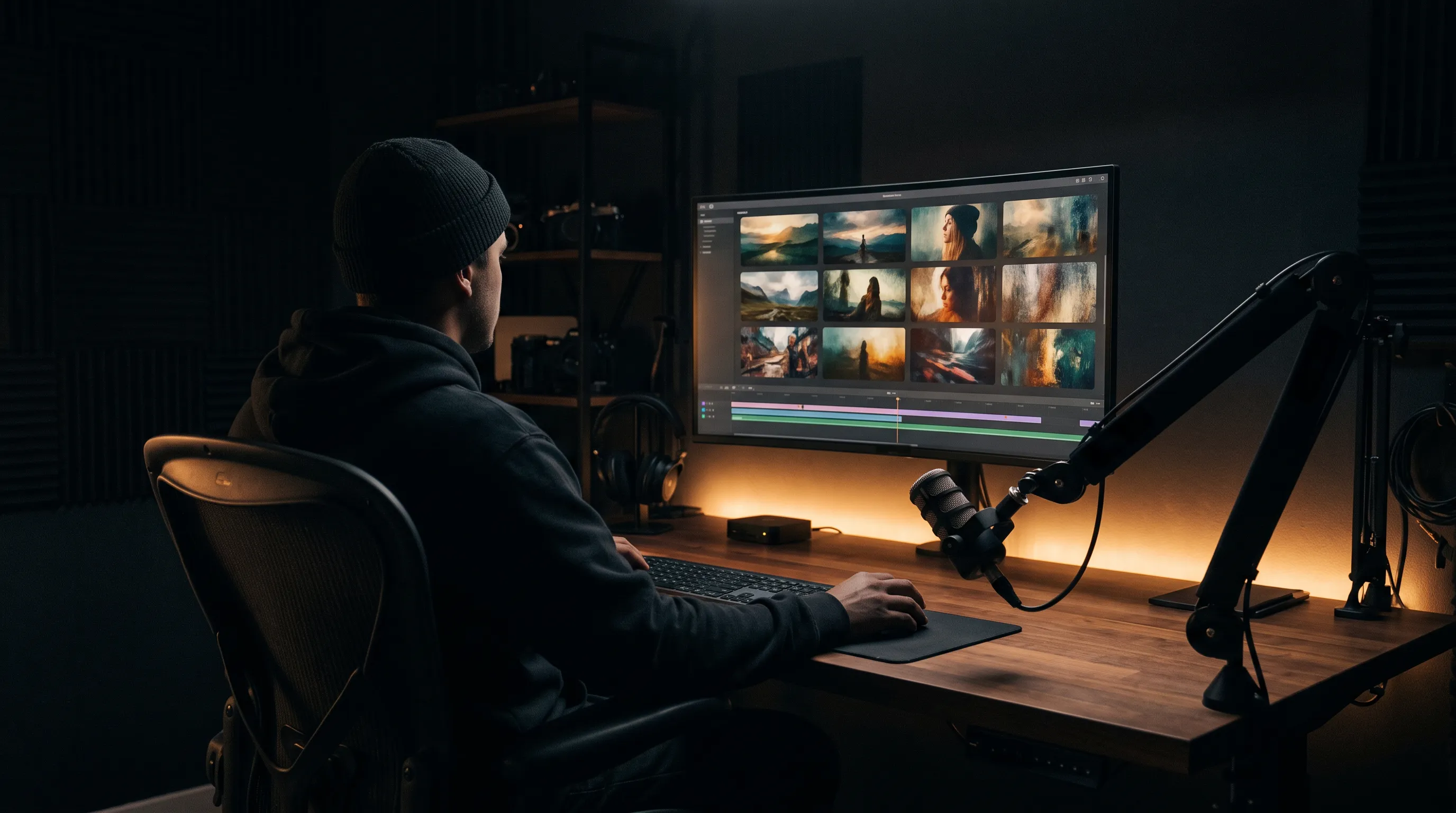
- Director Room: write a brief and work through a storyboard, the shots and a cut on a timeline with voice and music. You can check every scene and change it before you pay for the next step, and the price is shown on each button.
- AI Studio: make single images, clips, voiceovers and music from a curated shelf of leading AI models, with natural AI voices in 12 languages.
- Caption Studio: add animated captions as the last step.
One thing to know before you start a channel that earns money: creations on MeetNour’s free plan are for personal, non-commercial use. A monetized channel needs a paid plan.
FAQ
Can a faceless YouTube channel made with AI be monetized?
Yes. YouTube does not ban AI and does not require a face on camera. A channel can earn money if it meets the Partner Program thresholds and passes review. Content that looks mass-produced or templated will not qualify, and neither will readings of material you did not create.
What is YouTube’s inauthentic content policy?
It is the rule that was called “repetitious content” until July 15, 2025. It covers content that looks made from a template or feels repetitive, including AI content that gives the impression of mass production. It is judged across the channel, so it can affect monetization for all of your videos.
Does an AI label reduce my views or earnings?
YouTube says disclosing AI content alone will not limit a video’s audience or its eligibility to earn money. The risk runs the other way: creators who repeatedly fail to disclose can face penalties, including removal of content or suspension from the Partner Program.
Can I use an AI voice on a monetized channel?
Yes, an AI voice is not banned. What matters is the content: an AI voice reading your own original script is very different from an AI voice reading someone else’s article. YouTube does not require disclosure when you clone your own voice for a voice-over.
Can an AI avatar host a finance or health channel?
Be careful. YouTube will not monetize an AI persona that presents itself as a human expert giving advice on health, legal issues, finances or politics. An AI character can still tell stories or explain general ideas, as long as it does not pose as a real expert.
MeetNour is launching soon. Join the waitlist to cast a recurring AI host and turn your own scripts into finished videos.

Write a brief.
Get a full campaign.
MeetNour is your AI production team in one tool: images, videos, AI avatars, effects, voiceovers and captions, with your brand kit and AI talent. A short shelf of leading AI models, kept current: Nour picks the right one for each job, or you choose.